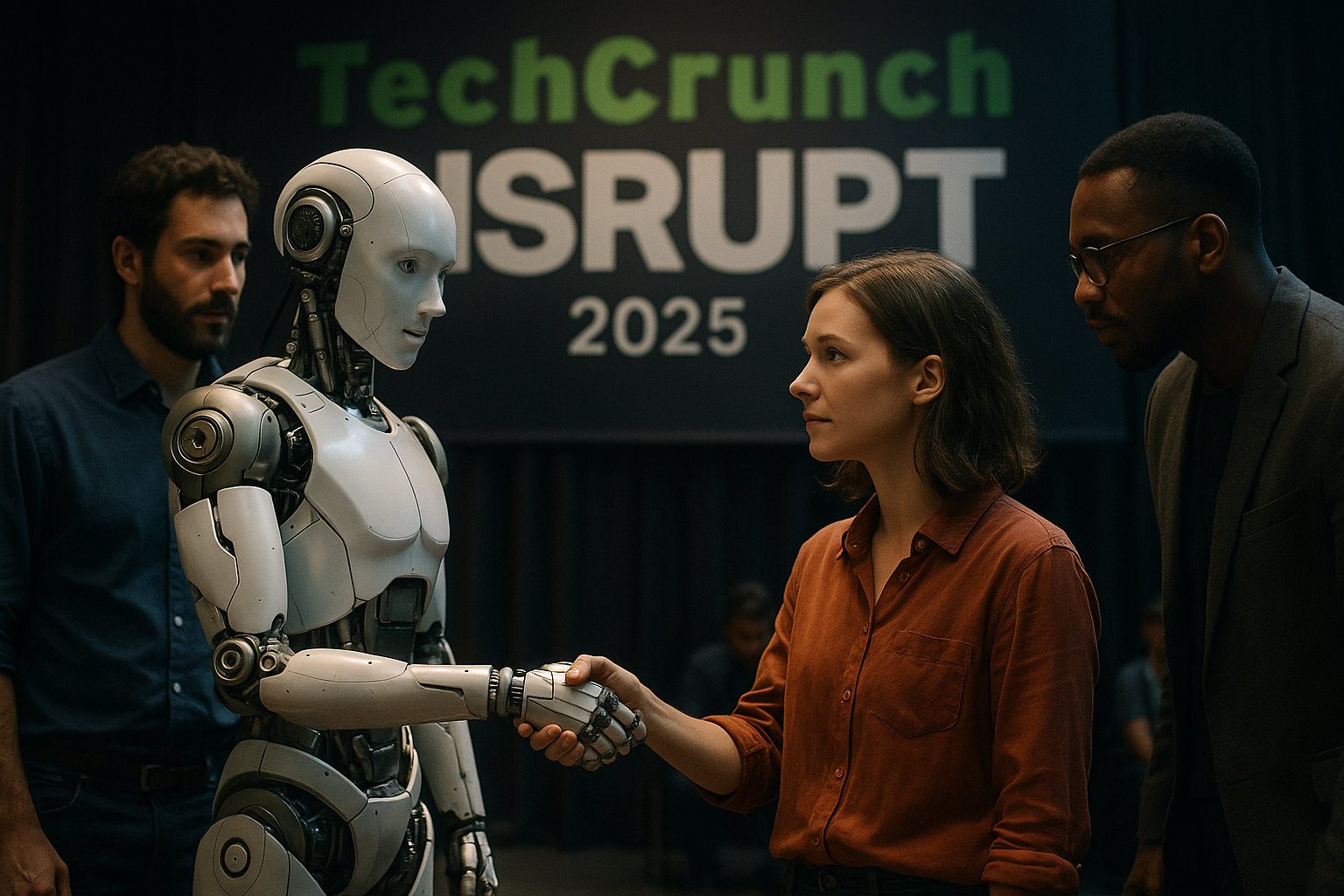
Harmonizing AI and Robotics: Key Takeaways from TechCrunch Disrupt 2025
The Future of AI Robotics: Innovations Shaping the Tech Landscape
Introduction
In the dynamic landscape of emerging technologies, AI robotics has rapidly ascended from science fiction into concrete reality, revolutionizing everything from healthcare and manufacturing to autonomous driving. As artificial intelligence becomes more powerful and robots grow increasingly dexterous, the convergence of these two domains is unlocking new frontiers of automation, efficiency, and human-machine collaboration.
Leading this charge into the future is TechCrunch Disrupt 2025, a premier robotics conference spotlighting cutting-edge breakthroughs across the tech ecosystem. This year’s event places significant focus on innovation in AI robotics, drawing together engineers, entrepreneurs, and researchers to showcase and debate what’s next in this transformative industry.
A major discussion point at the 2025 conference is the rapid evolution of autonomous vehicle (AV) technology, acting as both an incubator and a beneficiary of robotics advancements. Self-driving systems are becoming smarter, safer, and more responsive thanks to AI-powered robotics, a synergy that’s fast reshaping not just transportation, but the wider workforce and social infrastructure.
Background
Over the past decade, the realm of AI robotics has experienced exponential progress. The journey began with basic robotic arms programmed to execute repetitive tasks on factory floors and evolved into intelligent systems capable of learning, adapting, and operating autonomously. Milestones include Boston Dynamics’ progression from manual controls to fluid, AI-driven bipedal robots, as well as OpenAI’s research into robotic manipulation through reinforcement learning.
Robotics conferences such as ICRA, CES, and of course, TechCrunch Disrupt, have been pivotal in pushing this momentum forward. These events fuel cross-disciplinary dialogue among tech giants like NVIDIA and emerging startups focused on specialized service robots or warehouse automation systems.
Crucially, the drive for continuous innovation has transformed AI robotics from a niche focus to a foundational pillar in the broader tech narrative. The infusion of machine learning, natural language processing, and computer vision has enabled robots not just to move, but to perceive, understand, and intelligently interact with their environments.
For example, robotic assistants once tethered to pre-programmed scripts can now engage in complex conversation, adapt to personalized user behaviors, and even exhibit rudimentary forms of empathy in healthcare settings.
Current Trends
The current wave of innovation in AI robotics is driven by the integration of automation technologies with deep learning algorithms. At TechCrunch Disrupt 2025, several prototypes and live demonstrations illustrated how robots are moving beyond structured environments into unpredictable, real-world scenarios.
Key trends included:
– Perceptive Robotics: Robots now perceive their surroundings through multimodal sensors enhanced by AI. This helps machines navigate dynamic spaces such as retail stores or emergency scenarios, ensuring safer human-robot interaction.
– Collaborative Automation: Known as “cobots,” these devices are designed to work alongside humans, increasing productivity without replacing the human touch. Companies like ShiftAI showcased machines that adjust in real-time to human gestures and speech.
– AV Technology Integration: Startups working on autonomous delivery drones and self-driving vehicles exhibited how AI robotics is essential in route optimization, obstacle recognition, and real-time traffic adaptation.
One powerful example was from MobilityPlus, which presented a prototype courier robot that combines lidar, GPS, and AI models trained on hundreds of thousands of deliveries. Like how a seasoned courier memorizes neighborhood pathways, the robot maps optimal paths and adjusts for obstacles or weather conditions in real time.
These trends suggest that AI robotics is no longer confined to controlled lab conditions. With each iteration, these systems are entering public spheres, becoming essential tools in supply chain logistics, elder care, urban mobility, and even entertainment.
Insights from Experts
Panels at TechCrunch Disrupt 2025 brought together industry leaders, researchers, and investors to discuss where AI robotics is headed—and what hurdles lie ahead.
Dr. Sophia Lin, CTO of RoboticHive, emphasized that while the hardware has matured, the true leap lies in deep AI-human interaction: “The next evolution,” she said, “is empathetic AI—robots that not only act but also understand emotional context and user intent.”
One particularly impactful keynote came from ElonTech’s Chief Innovation Officer, who highlighted the importance of ethical design in AV systems. Given their potential to make split-second, life-impacting decisions, ensuring transparency and accountability in AI robotics is now seen as paramount.
Experts also addressed persistent challenges:
– Data Bias: AI models still struggle with biased training data, leading to inconsistent performance in diverse populations or geographies.
– Regulation and Safety: The robotics industry still lacks unified safety standards, especially as humanoid and AV robots enter urban environments.
But innovation remains the path forward. As outlined in TechCrunch’s coverage of the conference (source), companies are forming multi-stakeholder alliances to build inclusive, safe, and scalable AI solutions.
Future Forecast
Peering into the future, AI robotics is poised to influence nearly every facet of human life, from the way we commute to how we interact with the elderly, access education, or treat chronic disease.
Predictions for the next 5–10 years include:
– Emotional AI Assistants: Capable of not only reading tone but also responding with contextually sensitive replies and behavior.
– Decentralized Manufacturing: Where AI-powered micro-factories, staffed by intelligent robotics, operate on-demand within urban areas.
– Full Integration with AV Ecosystems: Seamless fusion of smart roads, vehicles, delivery bots, and traffic systems, creating an orchestrated, autonomous urban mobility network.
Events like TechCrunch Disrupt 2025 play a crucial role in shaping this timeline. By bringing innovations to the forefront and fostering collaboration across tech verticals, such forums accelerate the adoption of transformative technologies and create blueprints for viable commercial applications.
In much the same way that the smartphone transformed everyday life a decade ago, the fusion of AI and robotics is already scripting the next great societal paradigm shift.
Call to Action
As AI robotics becomes an integral part of our technological fabric, staying informed is more important than ever. From urban planning and healthcare policy to entrepreneurial ventures and venture capital, the ripple effects of this field will be immense.
If you’re passionate about the future of tech, consider attending TechCrunch Disrupt 2025. It’s a unique chance to see visionary ideas come to life, network with innovators, and participate in conversations that will define the next chapter of human-machine collaboration.
For more insights, read the full TechCrunch article on AVs and humanoid evolution from the conference here.
Explore related articles:
– “How Robotics is Reshaping Urban Delivery Systems”
– “Machine Learning’s Role in Next-Gen Industrial Automation”
– “The Ethical AI Dilemma in Autonomous Systems”
Join the conversation. Share your thoughts, attend events, and stay engaged with the world of AI robotics. The future is not just being built—it’s learning.