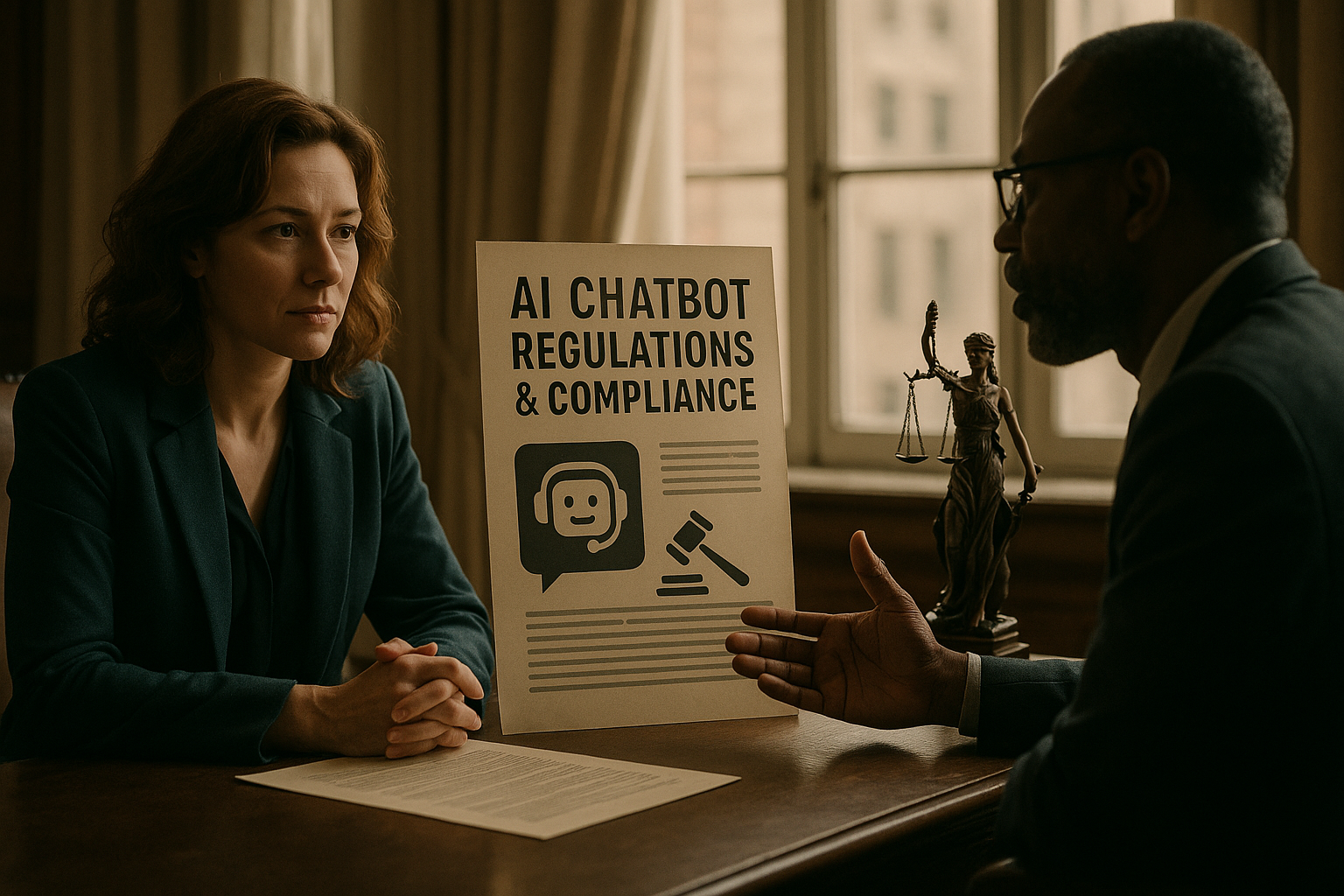
AI Chatbot Regulations: Navigating the Future of Compliance
Introduction
AI chatbots have rapidly become a staple in digital ecosystems, revolutionizing customer service, mental health platforms, legal assistance, and even companionship. With advancements in natural language processing and the implementation of generative AI, these systems now mimic human interaction more convincingly than ever before. However, these advancements have also sparked urgent conversations about responsibility, safety, and transparency.
As chatbots evolve, so does the need for comprehensive legislation. The growing public concern about accuracy, manipulation, and misuse has led states like California to spearhead initiatives in this space. The proposed California bill, which aims to regulate AI companion chatbots, is a pioneering move that signals a broader wave of AI chatbot regulations. This shift is not only a reaction to consumer safety but also a proactive step in aligning with robust AI ethics frameworks.
With chatbot safety and user privacy taking center stage, it’s clear that governments, developers, and businesses alike must adapt to this new regulatory environment. In this article, we explore California’s legislative push, analyze broader regulatory trends, and forecast what the future may hold for AI chatbot governance.
Background
The journey of AI chatbots began with rule-based systems like ELIZA in the 1960s and has since evolved into complex neural networks capable of dynamic dialogue. Today, chatbots are embedded in a range of industries:
– Healthcare: Offering symptom checks and mental health support
– Finance: Guiding customers through loan applications and fraud detection
– Retail: Personalizing shopping experiences
– Education: Tutoring and administrative assistance
Despite their vast utility, the legal infrastructure surrounding chatbots remains fragmented. While regions like the European Union have made strides in AI-specific legislation through the AI Act, the U.S. regulatory landscape is less centralized. States have started crafting their own policies, and California law has emerged as a benchmark for digital governance—most notably with its California Consumer Privacy Act (CCPA).
The ethical implications are as significant as the legal ones. AI chatbots raise multiple red flags:
– Transparency: Are users aware they’re talking to a bot?
– Misinformation: Can flawed outputs spread false or harmful content?
– Manipulation: Is it ethical for chatbots to engage emotionally without user consent?
Prominent cases, such as the integration of GPT-based chatbots for romantic companionship, have pushed these ethical concerns into the spotlight. As a result, regulatory scrutiny is no longer optional—it’s inevitable.
Trends in AI Chatbot Regulations
The global regulatory environment for AI chatbots reflects a tension between technological enthusiasm and governance caution. Countries like Canada, the UK, and Australia are converging on similar themes: transparency, consent, emotional manipulation, and safety.
California, often a trailblazer in policy innovation, is advancing a bill that directly addresses AI companion bots and their potential psychological risks. As reported by TechCrunch, the bill mandates developers to include clear disclaimers and safety features in chatbot interfaces to prevent emotional harm (source).
These actions are closely tied to current public concerns:
– Chatbot safety: Developers must mitigate scenarios where users form unhealthy attachments to bots.
– Data privacy: Chatbots often store sensitive personal information, making them vulnerable to breaches.
– Algorithmic bias: Without oversight, chatbots risk perpetuating societal prejudices.
A useful analogy here is that of self-driving cars. Just as governments quickly realized the necessity of safety protocols in autonomous vehicles, chatbot developers and legislators must approach conversational AI with similar urgency. Failing to do so leaves users exposed and trust eroded.
Insight into Ethical Implications
The ethical landscape for AI chatbots is intricate and continues to evolve. Developers and companies must balance innovation with accountability. AI ethics involves questions like:
– Should a chatbot simulate empathy?
– Who is responsible if a chatbot gives harmful advice?
– Can minors safely interact with emotionally intelligent bots?
Some businesses have already felt the impact of poor ethical considerations. For instance, in early 2024, a mental wellness platform leveraging AI for therapy-like conversations received backlash when users reported emotionally distressing outputs. The lack of human oversight and mental health vetting led to a forced shutdown and a wave of lawsuits.
Businesses must implement ethically-aware AI design—which includes bias auditing, safe interaction parameters, and consent mechanisms. Transparency reports and ethics review boards are becoming standard practice in responsible AI development.
In this context, California’s proposed bill can be seen as an ethics codification. It operationalizes principles of chatbot safety and directly addresses the emotional risks of AI companions. That sets a precedent for other states and countries to follow.
Future Forecast: The Evolving Regulatory Landscape
Looking ahead, the future of AI chatbot regulations is poised to become more structured and expansive. Here are a few emerging trends to watch:
– Federal Legislation: With California leading the charge, momentum is building in Congress for a federal AI Act tailored to consumer-facing systems.
– Global Harmonization: International data privacy laws like the EU’s GDPR could influence U.S. chatbot regulations to achieve cross-border compliance.
– Tech-Integrated Governance: AI systems may eventually include built-in compliance mechanisms that automatically adapt to local legal frameworks.
From a business perspective, adapting to regulation is not just a legal necessity—it’s a market differentiator. Companies that prioritize AI ethics and integrate multidisciplinary oversight will enjoy greater user trust and long-term viability.
Without such measures, the consequences could be dire. Unregulated chatbots may lead to misinformation epidemics, psychological distress, or mass data exploitation. History shows that innovation without boundaries often leads to unintended and severe consequences. Regulation provides a framework to harness AI’s power constructively.
Call to Action (CTA)
As AI chatbots continue to shape our digital interactions, now is the time for stakeholders—developers, policymakers, and consumers—to engage proactively. The rise in AI chatbot regulations, particularly through forward-thinking California law, represents more than bureaucracy: it’s a necessary evolution for technology that affects millions daily.
We encourage our readers to:
– Stay updated on new bills and legal guidelines concerning chatbot safety
– Advocate for strong, transparent frameworks grounded in AI ethics
– Participate in public and professional forums to shape the direction of AI legislation
Visit our blog regularly for insights into emerging AI policies and how they intersect with innovation. What are your thoughts on the regulation of AI companion chatbots? Have regulations influenced your approach to using or developing chatbots? Share your experiences in the comments.
—
Related Articles:
– _How the CCPA Lays the Foundation for Responsible AI_
– _AI Ethics in Practice: Lessons from Developing Human-Like Chatbots_
Citations:
1. TechCrunch: California bill regulating AI companion chatbots
2. Forbes: The Ethics of AI and the Future of Governance