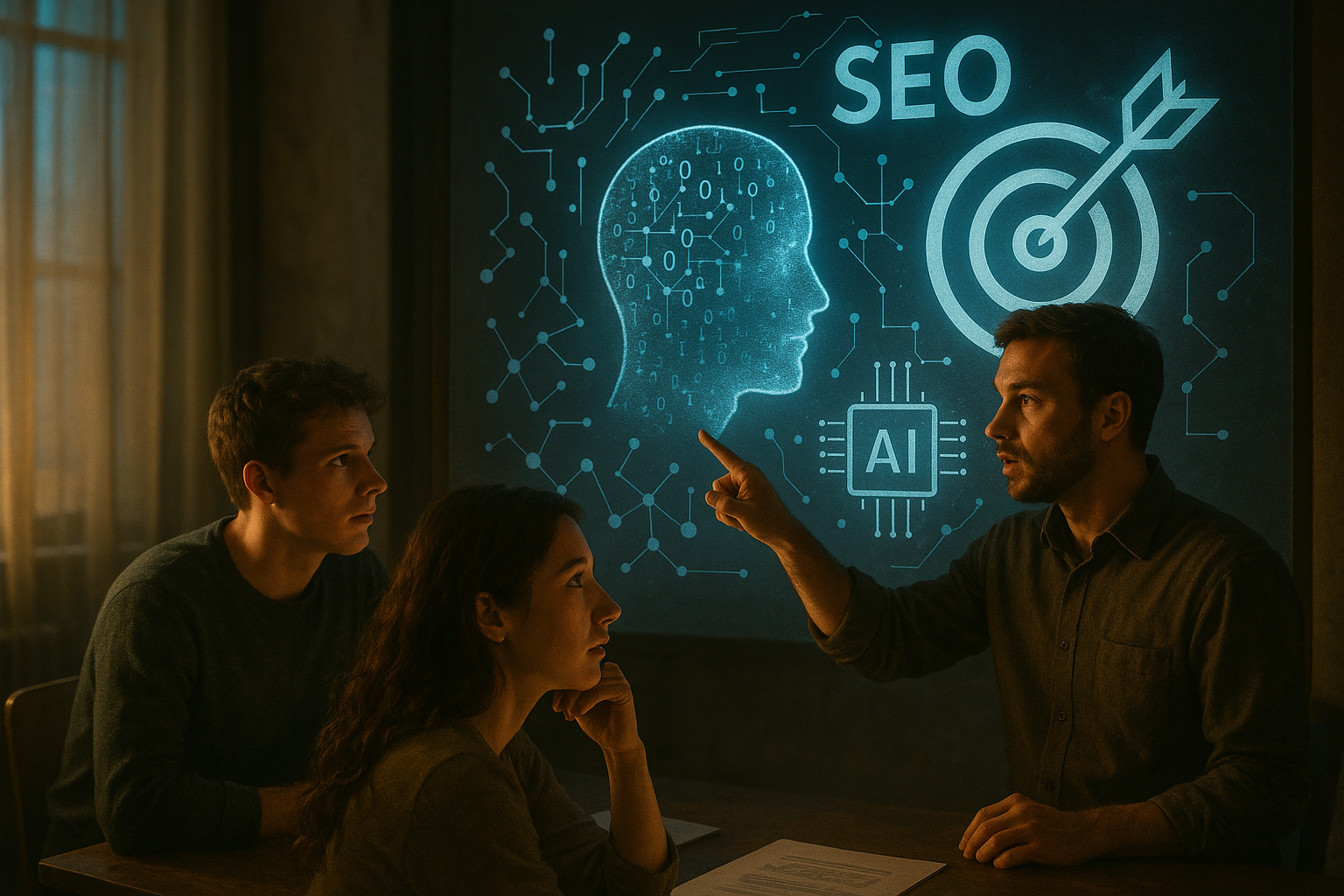
Mastering User Intent Targeting in SEO: Strategies for Success
Introduction
In today’s dynamic digital landscape, executing successful SEO strategies goes beyond optimizing technical aspects and incorporating high-volume keywords. The new frontier in search engine optimization is user intent targeting—a method that involves aligning your content with the underlying motivations behind each search query.
Whether users are seeking information, navigating to specific sites, or preparing to make a purchase, understanding their intent allows marketers to craft content that not only ranks but resonates. With the integration of AI in SEO, businesses can now gain deeper insights into these intents, resulting in more targeted and effective digital marketing campaigns.
Background
At its core, user intent refers to the purpose behind a user’s search. Distilled into three main categories, user intent includes:
– Informational: The searcher is looking for information (e.g., \”how does machine learning work\”).
– Navigational: The searcher intends to find a specific website or page (e.g., \”OpenAI homepage\”).
– Transactional: The user is ready to make a purchase or take a specific action (e.g., \”buy SEO software\”).
Grasping these distinctions is critical to successful content strategy. Traditional keyword-focused tactics are no longer sufficient—search engines like Google now prioritize context and relevance over simple keyword matching.
This is where AI in SEO becomes transformative. By analyzing vast datasets, AI algorithms can decode complex search behaviors, offering granular insights into how and why users search. For instance, machine learning can detect changing intent signals from search history, click-through rates, and engagement patterns, allowing brands to predict what users want—before they even articulate it.
A fitting analogy: Think of SEO strategies in the past as trying to catch fish with a net. Today, with AI-enabled user intent targeting, it’s more like spearfishing—with precision and purpose.
Current Trends in User Intent Targeting
As search engines become increasingly sophisticated, user intent targeting has evolved from a niche tactic to a foundational principle of search engine optimization. Query context, semantic search, and natural language processing now drive how content is ranked and served to users.
Key Trends Shaping the Landscape:
– Query Context Modeling: Search engines no longer parse queries word by word but instead interpret them holistically. For instance, AI models like BERT help Google understand the relationship between words in a sentence, refining intent recognition.
– Dynamic Personalization: Leveraging AI, many content platforms adapt dynamically to user behavior. Personalized landing pages, curated recommendations, and conditional content delivery ensure relevancy at every point of the user journey.
– Zero-Click Searches: Increasingly, users are getting answers directly from the search results page. This places emphasis on structured data and featured snippets as tools to fulfill informational intent.
Case in Point: A SaaS brand enhanced its traffic by 35% by reengineering its blog content around user intent clusters instead of keywords alone. By tailoring posts to reflect intent categories—using AI analytics—they improved SERP positioning and lowered bounce rates.
This strategic pivot from reactive SEO to proactive, intent-driven content strategy is cementing itself as an essential element of successful digital marketing efforts.
Insights from User Intent Data
The power of user intent targeting is unlocked through intelligent data collection and analysis. Businesses today are not just recording what users click—they’re deciphering why they click.
Strategies for Leveraging Intent Data:
– Behavioral Analytics Tools: Platforms like Google Analytics, Hotjar, and Surfer SEO help segment users based on pages visited, time spent, and conversion paths—each a clue into underlying intent.
– Intent Scoring: Similar to lead scoring in CRM systems, intent scoring gauges how close a user is to converting. AI models can integrate CRM, email, and on-site behavior to assign probability values to different actions.
– Content Mapping: Once intent data is in hand, aligning it with funnel stages enables highly relevant content tailored to specific micro-moments.
Consider this: A user searching for \”best CRM tools\” likely has informational intent. However, if they later search \”HubSpot pricing,\” their transactional intent becomes clear. Brands that map content across this journey—from blog comparisons to pricing calculators—are not just optimizing SEO; they’re optimizing customer experience and ROI.
According to insights from Hackernoon, businesses leveraging intent data see a 2x to 3x increase in lead conversion rates. Clearly, user intent targeting lies at the intersection of data science and digital storytelling.
Forecast: The Future of User Intent in SEO
As AI technologies continue to advance, user intent targeting will become increasingly predictive, nuanced, and embedded into every aspect of digital marketing.
Emerging Possibilities:
– Predictive Intent Modeling: With deep learning and big data integration, future SEO tools will forecast future intent based on user sequences—anticipating needs before the user even states them.
– Voice and Visual SEO: As voice assistants and visual search tools gain popularity, understanding conversational and visual intent will redefine content creation best practices.
– Hyper-Personalization at Scale: AI will enable real-time personalization of websites based on inferred intent, revolutionizing content strategy and user engagement.
However, with innovation comes challenge. Ethical concerns around data privacy and algorithmic transparency will rise. Google’s updates will continue to devalue manipulative content, pushing businesses toward genuine value creation.
To stay ahead, companies must:
– Continuously audit and adapt SEO strategies based on evolving user behavior.
– Invest in AI-driven tools that interpret and respond to intent data.
– Train their content teams to craft intent-first narratives.
SEO, once a technical function, is now a discipline driven by empathy and data—a strategic dance of understanding people at scale.
Call to Action
As AI reshapes the boundaries of what’s possible in search engine optimization, honing in on user intent targeting is no longer optional—it’s imperative. Whether you’re a solo content creator or an enterprise SEO lead, reevaluating your approach through the lens of user motivation is the smartest step forward.
Now is the time to:
– Audit your existing content through AI-powered SEO tools.
– Align your content strategy with the buyer’s journey, not just keywords.
– Monitor user signals regularly to stay aligned with shifting intent.
Subscribe to our blog for expert breakdowns of the latest evolutions in digital marketing, AI, and SEO strategy. Elevate your content, sharpen your targeting, and future-proof your rankings.
—
Related Articles:
– 5 AI Tools That Will Revolutionize Your SEO Strategy
– Content Strategy in the Age of Intelligent Search
– How Semantic SEO is Changing Rankings Forever
Citations:
– Hackernoon – AI-Driven User Intent Targeting for SEO
– Search Engine Journal – Why User Intent Is More Important Than Keywords
—
Master SEO not just by ranking content, but by understanding your users like never before.